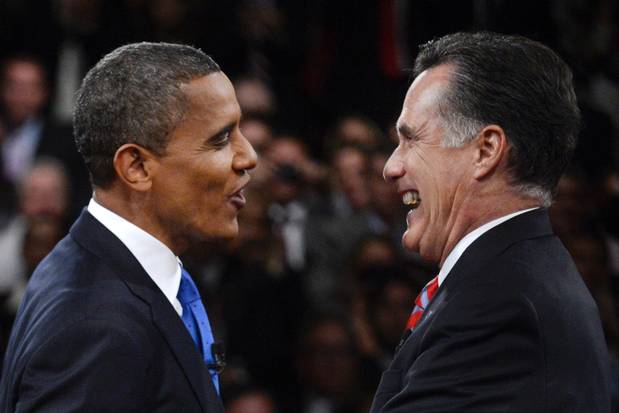
Here it is. Election day, Finally! It has been a raucous campaign cycle. On the national level, President Obama and Governor Romney have exchanged body blows for 18 months. Here in Utah, Mayor Mia Love and Congressmen Jim Matheson, if the rules would have allowed it, might have entered an MMA ring to determine who would win the 4th congressional district in Utah.
The nastiness of the battles have many longing for the more gentile days of American politics, particularly hearkening back to the stately, distinguished days of our founding fathers, to which I say, "what are you smoking?"
Our political history is littered with smear campaigns, lies and even murder. In fact you could argue the founding father's wrote the book on ugly politics. Historian Edward Larson said of the FF's "They could write like angels and scheme like demons,"
Thomas "The Brawler," Jefferson VS. John "The Crippler," Adams
As George Washington prepared for retirement from the presidency, a frenzied fight was unfolding behind the scenes. Thomas Jefferson and John Adams, with the help of their surrogates, where as Larson suggests, "scheming" to be the next president. Jefferson hired James Callendar to do a hit job on Adams, and Callendar did it in spades writing that Adams was:
"a hideous hermaphroditical character, which has neither the force and firmness of a man, nor the gentleness and sensibility of a woman."
Did the guy on the two dollar bill just call John Adams a "hermaphrodite?"
Adams wasn't a saint either, in return, the team that supported the soon-to-be second president of the United States and signer of the Constitution said this of Jefferson:
"a mean-spirited, low-lived fellow, the son of a half-breed Indian squaw, sired by a Virginia mulatto father ... raised wholly on hoe-cake (made of coarse-ground Southern corn), bacon, and hominy, with an occasional change of fricasseed bullfrog. ..."
Team Adams was also quick to label Jefferson, who supported the French Revolution, a dictatorial, homicidal maniac if elected.
"Murder, robbery, rape, adultery, and incest will all be openly taught and practiced, the air will be rent with the cries of the distressed, the soil will be soaked with blood, and the nation black with crimes."
The Pimp VS. The Killer
In the election of 1812, Andrew Jackson accused John Quincy Adams of serving as a pimp for the Russian Czar, to return the favor, Adams suggested that Jackson had killed defectors during his time as a general during the war of 1812.
Miscellaneous Pot Shots
1) Davy Crockett accused the portly Martin Van Buren of wearing a corset.
2) Opponents of President James Buchanan, who had a congenital condition that caused his head to tilt to the left, started a whisper campaign claiming that J.B. had once tried to unsuccessfully hang himself.
3) Grover Cleveland was accused by his opponent James Blaine of fathering an illegitimate child, that he allegedly left fatherless. At Blaine rally's the crowd would chant, "Ma, Ma, where's my pa?" After Cleveland won the presidency, that year, his supporters responded with the chant, "gone to the White House, Ha, ha, ha!"
The Big Ugly
Politics never got as ugly as it did in 1800's when Aaron Burr, Vice-President of the United States called out Alexander Hamilton for a duel. Burr, was about to be dropped from the Jefferson ticket and had lost a couple of political races and he felt that Hamilton was the guy who'd done him in politically. In 1804 he shot and killed Hamilton in New Jersey.
After Hamilton died, President Jefferson did indeed dump Burr, probably not a bad idea, Ironically Burr was never charged with killing Hamilton. Burr would spend the rest of his life trying to start revolutions and generally raising hell around the world.
So, as you pine for the good ol' days this election day remember the words of Billy Joel, "The good old days weren't always good, and tomorrow's not as bad as it seems."
Tuesday, November 6, 2012
Monday, November 5, 2012
"Shoe less" Mia Love
Mia Love isn't wearing shoes. The mayor of Saratoga Springs, Utah, a woman who is on the precipice of knocking off 6 term congressman Jim Matheson, to take her seat in one of the most vaunted chambers in American politics, is barefoot. Love knows I am coming. The mayor has just been tapped by the Republican National Committee to speak at the nominating convention for Mitt Romney in Tampa, Florida, and our assignment desk has arrange for me to show up with a camera at Love's new and spacious Saratoga Springs home. She is dressed like a congresswoman might dress, Orange power blouse, brown power suit, but no shoes, and no socks.
![]() |
| Mia Love speaks at the Republican National Convention |
Love is an indefinably disciplined candidate who seldom, if ever veers off script. Even in casual conversation, she, sometimes with awkward adherence, will not drift from her talking points. "Man this must be exciting, and nerve wracking as well," I attempt to make small talk as photographer Matt Michela sets up lights in anticipation of our interview Love, isn't going to break from character, "it's an opportunity to talk about real issues that affect real Utahn's," she recites, unwilling to express giddiness fear, or awe, about the surreal world in which this once unknown mayor from a tiny Utah town has now been thrust.
During our interview Love is confident, energetic and bold, if not repetitive. The answers I hear today, do not vary significantly from the quotes she's given to other newspaper reporters and TV journalists in the past.
When I ask her if race, (Love is black, the daughter of Haitian immigrants) may have been a factor in her selection as a speaker at the Republican National Convention, she pulls out a soundbite I've heard before, "Saratoga Springs does not have the highest bond rating in the state of Utah because I'm black," she repeats. I understand her reluctance to veer from script, at the time, she is 15 points behind the incumbent and she certainty doesn't want to utter a gaffe that would end up destroying her then slim chance of knocking off Matheson in November.
"What do you think about Todd Akin's comments?" I ask, referring to the Missouri Republican, who had just made that infamous "legitimate rape," statement that was exploding into a full-fledged media disaster for his run for the US Senate race in the "Show-me State."
It was a question the mayor hadn't received in the past, and one for which she was not prepared, "Well we don't know what happens in a person's personal life," Love wanders, searching for an answer, before shutting down the meandering word grasp and finally concluding, that she doesn't adhere to Akin's views.
![]() |
| Congressman Jim Matheson |
As Matt removes the lapel mic from Love's collar, I flopped down casually onto her large leather sofa, "We might be sending someone to cover your speech," I announce, to which a man with a shaved head, and oddly ornate button-down shirt whose been standing nearby, silently texting and emailing on his smart phone, finally interject curtly, "who?" Probably Decker," I say benignly, referring to our eccentric, political reporter, Rod Decker, a surly disheveled yet thoroughly entertaining, and wildly competent reporter. Decker is a Utah institution, he doesn't delivery his stories as much as he bellows them into his microphone, peaking the VU meters on the control board back at the station. "We've got nothing to say to him," announces the bald man. "Listen," Love says, eyes burrowing into mine, "if you are fair to us, you will get your access. If not..." Love trails off, leaving the rest of her sentence a mystery for me to interpret as I will.
"Well," I say to the woman who may be the next representative from Utah's 4th District, "You'll find, if you win, some stories will be positive, some stories will be negative, but in the end, the coverage will even out and be fair overall." Love just stares at me, unconvinced unmoved, and silent at my answer.
"well," I slap me palms together, "it's nice to meet you mayor, good luck in Florida." I turn and head towards the large, heavy oak front door of her home. "What time will this be on?" she asks, "Four, Five and 6 PM," I answer. "OK," she moves in closer, eyes locked on mine, "I'm going to watch them all," she warns, "each and every one of them," her eyes squint, then she smiles, "have a good day," she announces as she rustles her bare feet across the pile carpet and escorts me to the door.
Wednesday, October 31, 2012
Hurricane Georges
The soft tap of the rain against the hood of my poncho reminds me of a child casually popping bubble wrap retrieved from a box filled with mailed Christmas gifts.
I desperately brush the rain drops off my camera lens, and point it as hundreds of people falling in line outside one of the only grocery stores still open in Pascagoula, Mississippi. Hurricane Georges is churning in the Gulf of Mexico, and these last minute shoppers make the nervous, yet familiar pilgrimage to the water, battery and canned foods isle.
For long time residents on the Mississippi Gulf Coast, hurricanes, and warnings of hurricanes are as much a way of life, as the changing of the leaves in Maine, or the first winter snowfall in Utah.
As they casually board up windows on their beach front homes, old-timers will often spin you a yarn, about Hurricane Camille in 1969. The storm flattened the Gulf Coast and eventually killed 259 people as it swept inland. "I been through Camille," they'll extol as they hammer rusty nails into warped, plywood, "If I can survive that, I can survive anything."
In 1998, I am, as I've mentioned before, still living in Pascagoula and working for television station WLOX. By now I am somewhat of a fixture, in the practical, blue collar, shipbuilding town. I am in the "bureau," which means I work with one other person outside of the main station located in Biloxi an hour away and, for the most part, am what they call in the business, "a one-man band," that means I run the camera, write the stories and deliver them on air all by myself.
After 2 years I've settled into the Southern way of living, where you accept the sweat soaked work shirt, moistened by the blazing Mississippi sun and accentuated by the humid air that sweeps off the gulf. You understand that parades in Moss Point start 30 minutes late, and your appointment with a city councilman or the sheriff might be delayed, if he finds himself, "visitin'," with an old neighbor after lunch.
As Georges climbs on shore, I am hunkered down in the Jackson County Civil Defense building. The solid, stubby, granite edifice is an immovable rock of a structure, and likely the safest place to be in town. As I gather my gear around me late the first night and lay down on the cold tile, under a banquet table inside the marble facade, I am ever aware of the torrent of rain, powered by 80 mile an hour winds, pummelling the building outside.
Early in the morning, we discover our tiny office, used to transmit stories back to the main station, has been destroyed. "you're gonna have to drive it here," says assignment manager Doug Walker, "we gotta get it on the air."
I am forced to make the hour long trip in a tiny Murcury Topaz, along an expansive extension bridge that towers several hundred feet over miles of Mississippi marshes. The eye of the storm has moved on to terrorize another community but the wind on I-10 is still wild, and the rain still torrential As my partner Amy and I reluctantly load into the news car, we brace for the long terrifying trip ahead. We dodge debris littering the soggy pavement, and pock marked by potholes burrowed into the highway by the passing storm.
Although I am behind the wheel, it is the 60 mile an hour winds that are doing the driving, pushing us frighteningly close to the Jersey barriers of this swaying bridge high above the water below. As we splash over mini-lakes that have formed on the road, I feel the car hydroplane as the tires detach from the pavement, thanks to 7 inches of water and begin to gracefully drift our little car out of control. Fortunately before the vehicle goes into a complete spin the rubber grabs black pavement again and jerk us back onto our path.
there is no talking in the cabin of our car, we only hear the whip of the wind and smashing of the rain. My hands grasp the steering wheel so tightly I fear I won't be able to remove them if we make it safely to Biloxi. As we pull off the towering bridge onto safer ground, Amy and I sigh together and spill out a frantic, jubilant laugh as we hug each other, and Amy drags her index finger under her left eye wiping the tears of fear from her face.
The next day is remarkably clear and cool, as I tour the town. Two-hundred year old oak trees are easily plucked from the soil and mindlessly laid hard on homes. The roof of the elementary school, a place once designated as a shelter for people without homes, has been plucked off. Small boats usually moored in the nearby harbor, are now casually tossed and planted on front lawns and in the middle of Denny Avenue. Homes, entire homes, are gone, swept away by an indifferent storm. All that remains of a dozen houses in the concrete slab on which they once sat.
In Pecan (pronounced Pea can) east of Pascagoula, long time residents paddle in boats down rivers that were once paved streets. I recall interviewing a rough hued southern boy, as he shovels mud out of his kitchen.
We chat about the sand, water levels, and "getting back to normal," when, like a SWAT team storming a drunks motel room after a long stand off, something burst out of the man's kitchen cabinet and onto my host's head. The wet, wild raccoon hugs his matted hair, the ratty mongrel eyes me intently and rabidly as it squawks and squeaks and hisses, I stumble backwards, fumbling my camera, and trying to steady myself against the kitchen counter only to send pots, and plates careening to the ground. "holy hell," I holler, as the man gives me a curious look, then pulls out a dog biscuit from his pocket and feeds it to the beast, "why you all bothered," he giggles, "this here's Charlie, he ain't gonna hurt ya." His laugh starts slow then quickens, becoming contagious as the giggles of 6 other dirty men in the room gather, much like that now passed hurricane, in hysterical laughter at me. "I'm sorry guys," I blurt sarcastically as I pick up my camera and dust it off, "it isn't everyday a 20 pound rodent springs out of the soup cabinet." I say embarrassed , "It is around here!" the man proclaims, as he laughs even louder, his buddies struggling to match his level of hilarity.
For the next week, I will toil daily telling stories about things like the 6 large alligators that escape from a nearby animal refuge and are tormenting power company employees attempting to spark the cities power grid back to life.
Every night I will drag myself home, to a house with no power. Thankfully for me and my roommate, our neighbors have stocked their refrigerators with ground beef, steaks, and sausage Each evening we will gather in the middle of the street for an unplanned party, easing down in weathered lawn chairs, eating and laughing into the darkened night, only to return, flashlights in hand, to dark house and get up the next morning, pull on my slickers, and splash into the salt water for another long, lonely day.
I desperately brush the rain drops off my camera lens, and point it as hundreds of people falling in line outside one of the only grocery stores still open in Pascagoula, Mississippi. Hurricane Georges is churning in the Gulf of Mexico, and these last minute shoppers make the nervous, yet familiar pilgrimage to the water, battery and canned foods isle.
For long time residents on the Mississippi Gulf Coast, hurricanes, and warnings of hurricanes are as much a way of life, as the changing of the leaves in Maine, or the first winter snowfall in Utah.
As they casually board up windows on their beach front homes, old-timers will often spin you a yarn, about Hurricane Camille in 1969. The storm flattened the Gulf Coast and eventually killed 259 people as it swept inland. "I been through Camille," they'll extol as they hammer rusty nails into warped, plywood, "If I can survive that, I can survive anything."
In 1998, I am, as I've mentioned before, still living in Pascagoula and working for television station WLOX. By now I am somewhat of a fixture, in the practical, blue collar, shipbuilding town. I am in the "bureau," which means I work with one other person outside of the main station located in Biloxi an hour away and, for the most part, am what they call in the business, "a one-man band," that means I run the camera, write the stories and deliver them on air all by myself.
After 2 years I've settled into the Southern way of living, where you accept the sweat soaked work shirt, moistened by the blazing Mississippi sun and accentuated by the humid air that sweeps off the gulf. You understand that parades in Moss Point start 30 minutes late, and your appointment with a city councilman or the sheriff might be delayed, if he finds himself, "visitin'," with an old neighbor after lunch.
As Georges climbs on shore, I am hunkered down in the Jackson County Civil Defense building. The solid, stubby, granite edifice is an immovable rock of a structure, and likely the safest place to be in town. As I gather my gear around me late the first night and lay down on the cold tile, under a banquet table inside the marble facade, I am ever aware of the torrent of rain, powered by 80 mile an hour winds, pummelling the building outside.
Early in the morning, we discover our tiny office, used to transmit stories back to the main station, has been destroyed. "you're gonna have to drive it here," says assignment manager Doug Walker, "we gotta get it on the air."
I am forced to make the hour long trip in a tiny Murcury Topaz, along an expansive extension bridge that towers several hundred feet over miles of Mississippi marshes. The eye of the storm has moved on to terrorize another community but the wind on I-10 is still wild, and the rain still torrential As my partner Amy and I reluctantly load into the news car, we brace for the long terrifying trip ahead. We dodge debris littering the soggy pavement, and pock marked by potholes burrowed into the highway by the passing storm.
Although I am behind the wheel, it is the 60 mile an hour winds that are doing the driving, pushing us frighteningly close to the Jersey barriers of this swaying bridge high above the water below. As we splash over mini-lakes that have formed on the road, I feel the car hydroplane as the tires detach from the pavement, thanks to 7 inches of water and begin to gracefully drift our little car out of control. Fortunately before the vehicle goes into a complete spin the rubber grabs black pavement again and jerk us back onto our path.
there is no talking in the cabin of our car, we only hear the whip of the wind and smashing of the rain. My hands grasp the steering wheel so tightly I fear I won't be able to remove them if we make it safely to Biloxi. As we pull off the towering bridge onto safer ground, Amy and I sigh together and spill out a frantic, jubilant laugh as we hug each other, and Amy drags her index finger under her left eye wiping the tears of fear from her face.
The next day is remarkably clear and cool, as I tour the town. Two-hundred year old oak trees are easily plucked from the soil and mindlessly laid hard on homes. The roof of the elementary school, a place once designated as a shelter for people without homes, has been plucked off. Small boats usually moored in the nearby harbor, are now casually tossed and planted on front lawns and in the middle of Denny Avenue. Homes, entire homes, are gone, swept away by an indifferent storm. All that remains of a dozen houses in the concrete slab on which they once sat.
In Pecan (pronounced Pea can) east of Pascagoula, long time residents paddle in boats down rivers that were once paved streets. I recall interviewing a rough hued southern boy, as he shovels mud out of his kitchen.
We chat about the sand, water levels, and "getting back to normal," when, like a SWAT team storming a drunks motel room after a long stand off, something burst out of the man's kitchen cabinet and onto my host's head. The wet, wild raccoon hugs his matted hair, the ratty mongrel eyes me intently and rabidly as it squawks and squeaks and hisses, I stumble backwards, fumbling my camera, and trying to steady myself against the kitchen counter only to send pots, and plates careening to the ground. "holy hell," I holler, as the man gives me a curious look, then pulls out a dog biscuit from his pocket and feeds it to the beast, "why you all bothered," he giggles, "this here's Charlie, he ain't gonna hurt ya." His laugh starts slow then quickens, becoming contagious as the giggles of 6 other dirty men in the room gather, much like that now passed hurricane, in hysterical laughter at me. "I'm sorry guys," I blurt sarcastically as I pick up my camera and dust it off, "it isn't everyday a 20 pound rodent springs out of the soup cabinet." I say embarrassed , "It is around here!" the man proclaims, as he laughs even louder, his buddies struggling to match his level of hilarity.For the next week, I will toil daily telling stories about things like the 6 large alligators that escape from a nearby animal refuge and are tormenting power company employees attempting to spark the cities power grid back to life.
Every night I will drag myself home, to a house with no power. Thankfully for me and my roommate, our neighbors have stocked their refrigerators with ground beef, steaks, and sausage Each evening we will gather in the middle of the street for an unplanned party, easing down in weathered lawn chairs, eating and laughing into the darkened night, only to return, flashlights in hand, to dark house and get up the next morning, pull on my slickers, and splash into the salt water for another long, lonely day.
Monday, October 29, 2012
It could have been worse
"The only thing that could make this day any better, is if the truck broke down," Photographer Mike DeBernardo, hisses ironcially after a hard afternoon on the road. He and I are assigned difficult story about the Vice-Principal of Vernal Middle School accused of sex crimes against a juvenile member of his family.
In addition to the distasteful subject matter, to do the story, we must drive 173 miles to Uintah County, some 3 hours and 30 minutes away.
As our deadline approaches we are plagued with mechanical and technical issues, all the gizmos in the live truck (I won't pretend to act like I know how they work) keep dying, thanks to a lack of power. My computer is also on the fritz, making it difficult to track down the mugshot of the vice principal accused of the crime.
We are able to get our story on the air at 10 PM but, cannot establish our live presence in Vernal. As we shut down the systems, pack away the lights, and prepare for our long slog home, Mike is peeved by the inability to "make," our live shot, and that's when he utters those now fateful words, "The only thing that could make this day any better, is if the truck broke down."
When the words float out of his mouth, I say what everyone says when someone utters something like that, "famous last words."
At 11:30 PM those "famous last words," begin to flash before our eyes, as Mike engages his bright beams, as we barrel down a dark and frigid highway 40 just outside of Duchesne, the scratchy song on the radio, buzzes off. The gauges begin to spin and whirl wildly, like the dials on a futuristic machine in a sci-fi movie, then relent before keeling over to the left. According to our dashboard monitors, we are careening across the pavement at zero miles an hour, with zero gallons of gas in our tank, and zero oil pressure to propel us back home. "Are the lights dimming?" I squint into the darkness, as the once brightly illuminated pavement is now just a dull, slight yellow, quickly disappearing before our eyes.
It only takes a handful of minutes for our truck to follow the cue of the dials, and, with engine choked to death, we slowly drift along the gravel shoulder to a silent pause, 10 miles from the nearest town, and 2 hours from home in Salt Lake City.
"Well, you got your wish," I sing to Mike, as we sit, stranded, the temperature, dropping quickly, a he engages the hazard lights. "Click, clack, click, clack," the ticking, keeping the monotone, heartless beat of our dark isolation.
"It's going to take the tow truck 2 hours to get here," Mike looks at the ceiling of the truck as he silences his phone with a finger tap "Thank goodness, we have cell service," or we'd be screwed," I add, "I might have been forced to kill and eat you." I joke, "well," Mike interjects as he scrolls Facebook on his smartphone, "it's still early."
It doesn't take long for the temperature to drop inside the cabin of our truck. It's about 25 degrees along this lonely stretch of highway. After about 2 hours, we watch our smoky breath, prompted by the fridgid temperatures, float out of our mouths as we begin playing the futile game, I call: "Oh, there he is, finally!" Every 10 minutes or so, we spot the tiny flash of headlights in the distance, to which one of us will, say, mostly hoping that our words, will somehow manifest our tow truck, "Oh there he is, finally," When the Semi or sleepy traveler rumbles past us, the second part of the game is to curse the driver and his vehicle for NOT being the tow truck driver. This goes on for about an hour, and I have to say is a lot of fun, particularly when you get to hurdle obscenities into the night at perfect strangers who have no inkling of your presence.
"Oh there he is, finally!" I shout, waiting for the payoff, of cursing him as he drives by, but wait, that really IS him."
The tow truck driver is a waking fire plug, stout and burly with a shaved head. Despite his gruff exterior, he's actually very kind. As we watch him jack the heavy white live truck onto the flatbed truck, he encourages, "Go get in the cab, you must be freezing."
After some small talk, (he went to East High, graduated in 1996,) Mike and I both doze off, only to be awaken by the heavy downshift of the truck, as we cascade around a dog leg turn, I open my eyes to see a row of deer, frozen in our path, unable to move as three tons of metal march on them, our driver pumps his breaks, and lays on his horn, within about 5 feet, the startled creatures gather themselves and scamper out of our unstoppable path. "whoa," I breath, "That was close," "yeah," the driver pants, "that scared me." I ask, wouldn't we have just shoved them out of the way, to which he answers, "No, this cab is made of fiberglass, We'd of been stranded out here."
Thirty minutes later, my head gently resting against the cold passenger side window, my body is vibrated to attention, and my ears ring with what sounds like a thousand duffle bags being opened one after another with rhythmic succession. Our exhausted truck driver has drifted to sleep, and the truck has in turn, floated gently across the highway rumple strips. "As I shoot a look at him, he blurts with eyes wide, "sorry!"
As the truck grinds to a stop in front of my house, at 4 AM, I give both men a weary nod and fumble into the darkness of my warm bedroom. Despite what seemed at the time , to be a disaster of a night, I click off all the things that COULD have gone wrong but didn't (no cell service, subzero temperatures, plowing into a family of deer, careening off the highway into an icy stream) and I mumble to myself, as I shed my coat, "heck, that wasn't so bad."
![]() |
| David Papadakos, accused of sex crimes |
As our deadline approaches we are plagued with mechanical and technical issues, all the gizmos in the live truck (I won't pretend to act like I know how they work) keep dying, thanks to a lack of power. My computer is also on the fritz, making it difficult to track down the mugshot of the vice principal accused of the crime.
We are able to get our story on the air at 10 PM but, cannot establish our live presence in Vernal. As we shut down the systems, pack away the lights, and prepare for our long slog home, Mike is peeved by the inability to "make," our live shot, and that's when he utters those now fateful words, "The only thing that could make this day any better, is if the truck broke down."
When the words float out of his mouth, I say what everyone says when someone utters something like that, "famous last words."
At 11:30 PM those "famous last words," begin to flash before our eyes, as Mike engages his bright beams, as we barrel down a dark and frigid highway 40 just outside of Duchesne, the scratchy song on the radio, buzzes off. The gauges begin to spin and whirl wildly, like the dials on a futuristic machine in a sci-fi movie, then relent before keeling over to the left. According to our dashboard monitors, we are careening across the pavement at zero miles an hour, with zero gallons of gas in our tank, and zero oil pressure to propel us back home. "Are the lights dimming?" I squint into the darkness, as the once brightly illuminated pavement is now just a dull, slight yellow, quickly disappearing before our eyes.
It only takes a handful of minutes for our truck to follow the cue of the dials, and, with engine choked to death, we slowly drift along the gravel shoulder to a silent pause, 10 miles from the nearest town, and 2 hours from home in Salt Lake City.
"Well, you got your wish," I sing to Mike, as we sit, stranded, the temperature, dropping quickly, a he engages the hazard lights. "Click, clack, click, clack," the ticking, keeping the monotone, heartless beat of our dark isolation.
"It's going to take the tow truck 2 hours to get here," Mike looks at the ceiling of the truck as he silences his phone with a finger tap "Thank goodness, we have cell service," or we'd be screwed," I add, "I might have been forced to kill and eat you." I joke, "well," Mike interjects as he scrolls Facebook on his smartphone, "it's still early."
It doesn't take long for the temperature to drop inside the cabin of our truck. It's about 25 degrees along this lonely stretch of highway. After about 2 hours, we watch our smoky breath, prompted by the fridgid temperatures, float out of our mouths as we begin playing the futile game, I call: "Oh, there he is, finally!" Every 10 minutes or so, we spot the tiny flash of headlights in the distance, to which one of us will, say, mostly hoping that our words, will somehow manifest our tow truck, "Oh there he is, finally," When the Semi or sleepy traveler rumbles past us, the second part of the game is to curse the driver and his vehicle for NOT being the tow truck driver. This goes on for about an hour, and I have to say is a lot of fun, particularly when you get to hurdle obscenities into the night at perfect strangers who have no inkling of your presence.
"Oh there he is, finally!" I shout, waiting for the payoff, of cursing him as he drives by, but wait, that really IS him."
The tow truck driver is a waking fire plug, stout and burly with a shaved head. Despite his gruff exterior, he's actually very kind. As we watch him jack the heavy white live truck onto the flatbed truck, he encourages, "Go get in the cab, you must be freezing."
After some small talk, (he went to East High, graduated in 1996,) Mike and I both doze off, only to be awaken by the heavy downshift of the truck, as we cascade around a dog leg turn, I open my eyes to see a row of deer, frozen in our path, unable to move as three tons of metal march on them, our driver pumps his breaks, and lays on his horn, within about 5 feet, the startled creatures gather themselves and scamper out of our unstoppable path. "whoa," I breath, "That was close," "yeah," the driver pants, "that scared me." I ask, wouldn't we have just shoved them out of the way, to which he answers, "No, this cab is made of fiberglass, We'd of been stranded out here."
Thirty minutes later, my head gently resting against the cold passenger side window, my body is vibrated to attention, and my ears ring with what sounds like a thousand duffle bags being opened one after another with rhythmic succession. Our exhausted truck driver has drifted to sleep, and the truck has in turn, floated gently across the highway rumple strips. "As I shoot a look at him, he blurts with eyes wide, "sorry!"
As the truck grinds to a stop in front of my house, at 4 AM, I give both men a weary nod and fumble into the darkness of my warm bedroom. Despite what seemed at the time , to be a disaster of a night, I click off all the things that COULD have gone wrong but didn't (no cell service, subzero temperatures, plowing into a family of deer, careening off the highway into an icy stream) and I mumble to myself, as I shed my coat, "heck, that wasn't so bad."
Thursday, October 25, 2012
In The Cabin
I can see the beehive awaken at the assignment desk, as the 10 PM producer, the assignment editor, and the executive producer, begin to buzz and weave. "The Desk," as it is known, is similar to NASA's mission control. Everything goes through it. Assignment editors listen police scanners farm the fax machine and email, and field calls from viewers.
Just 15 minutes before the 6 PM newscast, someone anonymously calls to say Greg Peterson, a well-known political activist and fundraiser has killed himself.
She thinks I know that Peterson has taken his own life, but all I have is an anonymous tip, and with 10 minutes to airtime, I need to hear the words from her mouth, before we can report anything. "So is Greg dead?" I ask bluntly. Not wanting to be the person who confirms the sad news, she back tracks, "I can't say anything about that." She sternly bucks up and walks away from her previous comments. "Was his body found in his cabin? That is what we are hearing," I press. "I can't confirm or deny that," she says briskly. "When will you issue the statement?" I ask..."hello"...silence...she's hung up, I am likely the first media call she's received and doesn't want to have her name attached to confirming her clients death.
Peterson is a successful financial planner, with ties to many top Utah lawmakers, as evidenced by the chummy video he shot and narrated of freshman Senator Mike Lee, waking golf balls into the grassy abyss of acreage owned by Peterson in Heber, Utah.
Despite efforts by some politicians to downplay his importance, Peterson $400,000 cabin in Heber was a frequent stop for seekers of higher office looking to raise quick cash. Pictures show a proud Peterson, microphone in hand, lording over dozens of campaign donors, perched high above them on his elevated porch, speaking confidently about politics, politicians, and power.
![]() |
| Peterson speaks to donors at his Heber cabin |
Peterson also counts Mitt Romney as a "friend," and with money influence, and infinite confidence, the smiling power broker is living the proverbial "Life of Riley,"
That "life," begins to unravel, as one woman after another accuses Peterson of raping and sexually assaulting them, often in the same cabin in which he has been raising money for politicians.
![]() |
| Mugshot |
In his mugshot taken after his arrest, Peterson wears a smirk swelling with the confidence of a man whose Rolodex is bulging with Utah's power players. Minutes after he is booked, those power players, one by one, step quickly away from the man who had helped them raise thousands of dollars for their political campaigns.
Peterson spent months in the Salt Lake County Jail, awaiting his trial, and finally managed to bail out last Friday.
"We're hearing Peterson killed himself," the 10 PM producer utters to me breathless, as she turns and barrels to her desk. That means "start making calls," which I do.
"Hello," Cara Tangaro breaths wearily into her cell phone, Tangaro, is Peterson's tough, outspoken attorney. "This is Chris Jones from 2 News, Cara how are you?" I say urgently, "I've been better," she answers, "we'll be issuing a statement soon," she interjects without allowing a question.
She thinks I know that Peterson has taken his own life, but all I have is an anonymous tip, and with 10 minutes to airtime, I need to hear the words from her mouth, before we can report anything. "So is Greg dead?" I ask bluntly. Not wanting to be the person who confirms the sad news, she back tracks, "I can't say anything about that." She sternly bucks up and walks away from her previous comments. "Was his body found in his cabin? That is what we are hearing," I press. "I can't confirm or deny that," she says briskly. "When will you issue the statement?" I ask..."hello"...silence...she's hung up, I am likely the first media call she's received and doesn't want to have her name attached to confirming her clients death.
While I talk to Tangaro, assignment editor Mehul Asher is doing the same with the Wasatch County Sheriff, and fellow reporter Kristina Flores is trying to get in contact with the man who brought many of the rape charges against Peterson, District Attorney Sim Gill, but he doesn't answer his phone.
I finally contact Gill, who confirms, that Peterson is dead, and has likely killed himself with a single gunshot to the head. Suicide, just days after his release from jail. Found dead in the same cabin that housed his proudest moments, and possibly his darkest, now revealed secrets.
Monday, October 22, 2012
big screen, big risks
We've got 1 minute!" the frantic director bellows into the mic on his headset. "we're gonna float!" "floating," is a no-no, "floating," is industry jargon meaning your story is not going to make it on air on time, and for reporters and photographers, "we're gonna float," means you have sinned against the news gods. If you "float," you must hang your head in shame as members of the production crew, the producer, other reporters and the boss shoot sharp glances your way as you make the humiliating trudge back to your desk.
Aside from getting the fact straight, there are few things more important than making your "slot."
On this night, the night of the second Presidential Debate, something warns me that the evening is going to be a pressure cooker, only compounded by the fact that I have tossed out the idea of using a brand new gizmo obtained by the TV station.
2News has recently added a new, massive, interactive big screen to our coverage. It allows reporters to manipulate the gleaming glass like a gargantuan smart phone, to do tasks like pull up data by touching the screen and displaying it to the audience, we can also draw on the surface and bring attention to certain issues. You've likely seen something similar to this on CNN during election coverage. It is a breathtaking new technology, but if you don't touch the right part of the plasma screen you might find yourself dragging a long yellow line across a graphic instead of pushing the colorful statistic out of the way. In short getting it right takes practice.
Other than photographer and editors using the Telestrator to draw glasses and mustaches on the head shots of reporters during their down time, the screen has not yet been utilized by any on-air types, and certainly not been used on television. I for some reason have volunteered myself as the proverbial test rat.
My task is to analyze data provided to us by Google. The company keeps track of everything users search and they will do so during the presidential debate. The search term, "binders full of women," increased by 435% after Mitt Romney mentioned it during the presidential face-off.
The Google guy, says expect the data to be posted 30 minutes after the debate, "an hour tops," he adds a chipper yet ominous warning. In the final analysis, more like an hour and a half, and that means the data drops at 9:30, half an hour before news time.
So all I have to do, is cull the data (9:40), pick the best bits (9:43), write a script, talk to the fellas in graphics, (9:47) who have to import the data, create a graphic, transfer to a hard drive(9:49), transfer the graphic from the hard drive to the big screen. (9:50) Now grab a photographer, have him shoot my presentation on the big board (9:55), run to the editors have them piece it all together (9:57), Jay wraps that up at 9:59, just in time for us to hear, "we're gonna float!"
Usually the editors must take that file and drop it into some other file that goes into the news program, but that process takes about 2 minutes, unfortunately we only have one. "We'll have to roll it from here," shouts the editor. That means instead of letting the sophisticated computer do all the work, Jay will have to listen to the anchor, and push the buttons himself to make the story end up on TV. "are we gonna make it!?" the producer's voice quivers the question at me on my cell phone, "Yes!" I pop into the receiver "Now Google tracks all this data," I hear anchor Mark Koelbel over a nearby monitor, calmly and pleasantly telling viewers, "Chris Jones has been looking over the data, Chris," Mark recites, "go!" blasts the director, and that is exactly what Jay does, and there I am, on TV, to the viewers at home it was seamless, to our crew behind the scenes it was utter chaos. No "floating" tonight, as I take my pulse, and collapse in my chair.
Tuesday, October 16, 2012
"I'm a Hooker."
Seeing her rush into my small office was perplexing, like glancing out a car window only to see an SUV resting on the roof of a house after a hurricane. I'd seen her before, walking sadly and suggestively down Jackson Avenue in Pascagoula, Ms. late at night. She was among a small cadre of prostitutes who prowl the 2 lane road, book ended on either side, by a long-closed auto parts store to the north, and a questionable massage parlor to the south.
"I'm a hooker," she announces without fear of judgement as tears flow from her eyes, her thick, wet steams marbled with black mascara. Inside the small office, she glances frantically, at the door she had just entered. "I Just got out a jail," she roots nervously through her fatigued, faux-leather bag, I assume for a tissue, or a cigarette.
Her dress is pretty, and modest. It is blue with splashes of red and white flowers. I can envision her sitting comfortably in a church pew in that ensemble, but this is her work uniform, and she likely wears it most every day. The blue and red, less brilliant than the day she received it, worn by the hot, Mississippi sun and faded by rainstorms that pepper the summer afternoons. The shoes are even more telling. The Dr. Scholl's are streaked with deep black scuff marks, and the flat wooden sole are rounded at the toe in heel, overworked grooves pressed away by hours and miles of endless walking.
As I've mentioned in previous blogs, my time in Pascagoula is my first job in television news, and everyday, it seems is a new, mind blowing experience. Like a man, blind at birth, given his vision well into old age, and this day in 1995, is no exception.
"The police just let me go," she cries dragging the back of her hand across her wet, runny nose, "but they spent all night raping me." She quickly grabs at her bra strap placing it firmly on her shoulder, as if the memory alone had forced it to leap back to her bicep. "What? What happened?" I'm trying to comprehend what I'm hearing, "I gotta go," she digs both thumbs into each of her eyes, then pirouettes and bolt out the glass office door, "hold on!" I follow her a few feet, as she darts down an alley, jogs around a corner, and is gone.
"I honestly don't even know if we arrested anyone for prostitution last night Chris," the shift captain will announce to me in his friendly, easy southern drawl, "and if we did Chris, man, I don't know how much stock you can put in them claims," he says as he tries to dismantle her charge, "ya say she said she was a prostitute huh?" he chimes trying to reinforce her credibility issues, as he tugs at his jowly chin, "It seemed like she wasn't lying," I insist, "I wonder why she would make a charge like that and just run off?" he lifts his beefy paw from his chin and stroking the back of his head. "I'll look into it for ya, OK?" But I can't promise anything." I will never hear another word from the captain on the allegation.
On my way home from work, I will take the long way past Jackson Avenue, trying to locate her again. I never do.
Several months later, my beeper buzzes alive, as I am summoned to a broken part of Pascagoula, populated by listing wooden fences, packs of meandering feral dogs, and houses topped with corrugated steel instead of shingles.
Police have found the murdered remains of a prostitute inside one of the exhausted shacks. I don't know if it is the woman who pleads with me for help that blazing August afternoon, but the description is similar. Either way, I think often about that day she charged into my office, how broken and helpless she seemed, and how futile my efforts were to do anything about it.
Subscribe to:
Posts (Atom)


